
The Science of Red Light Therapy
Light. Mitochondria. Cellular Energy.
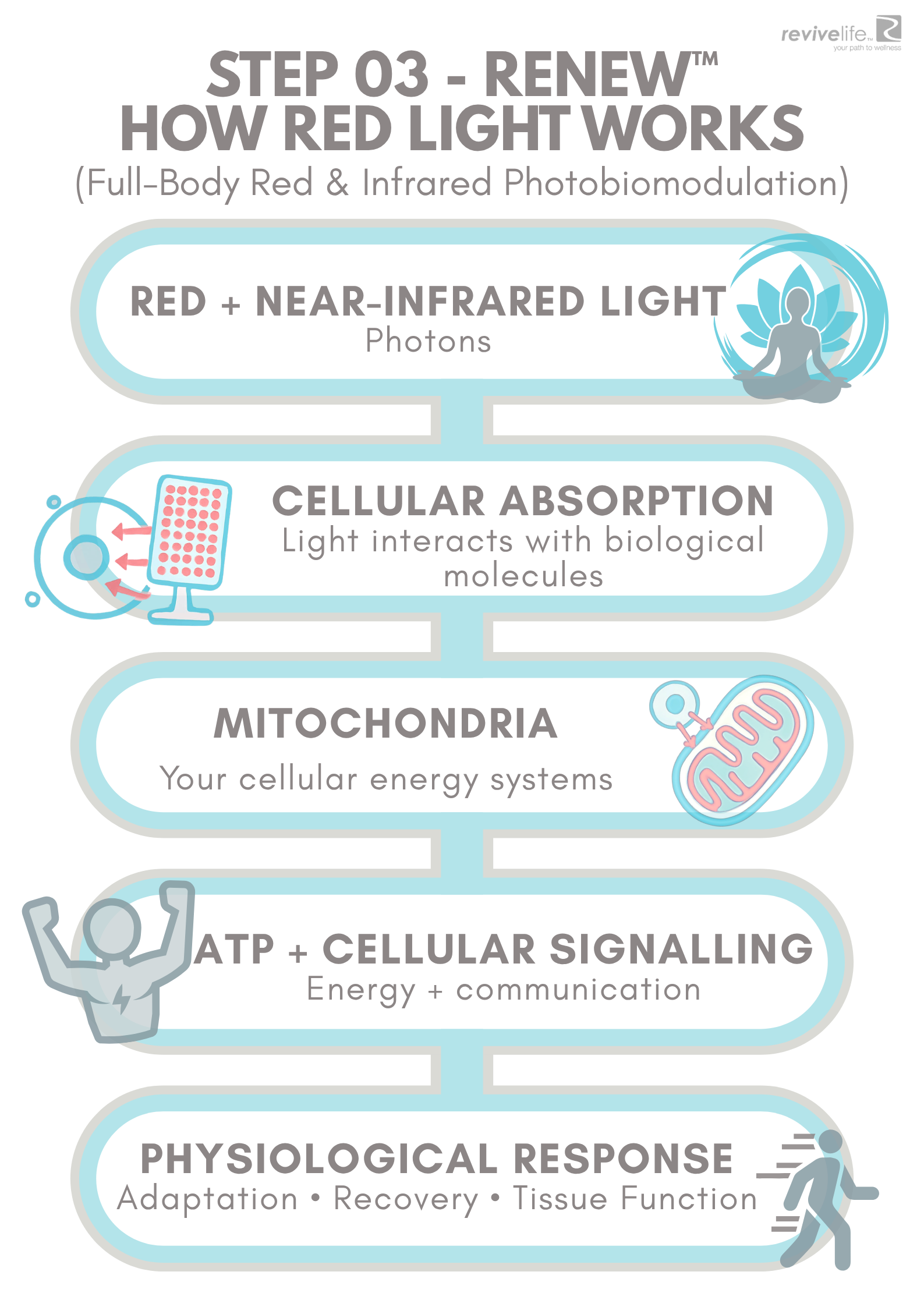
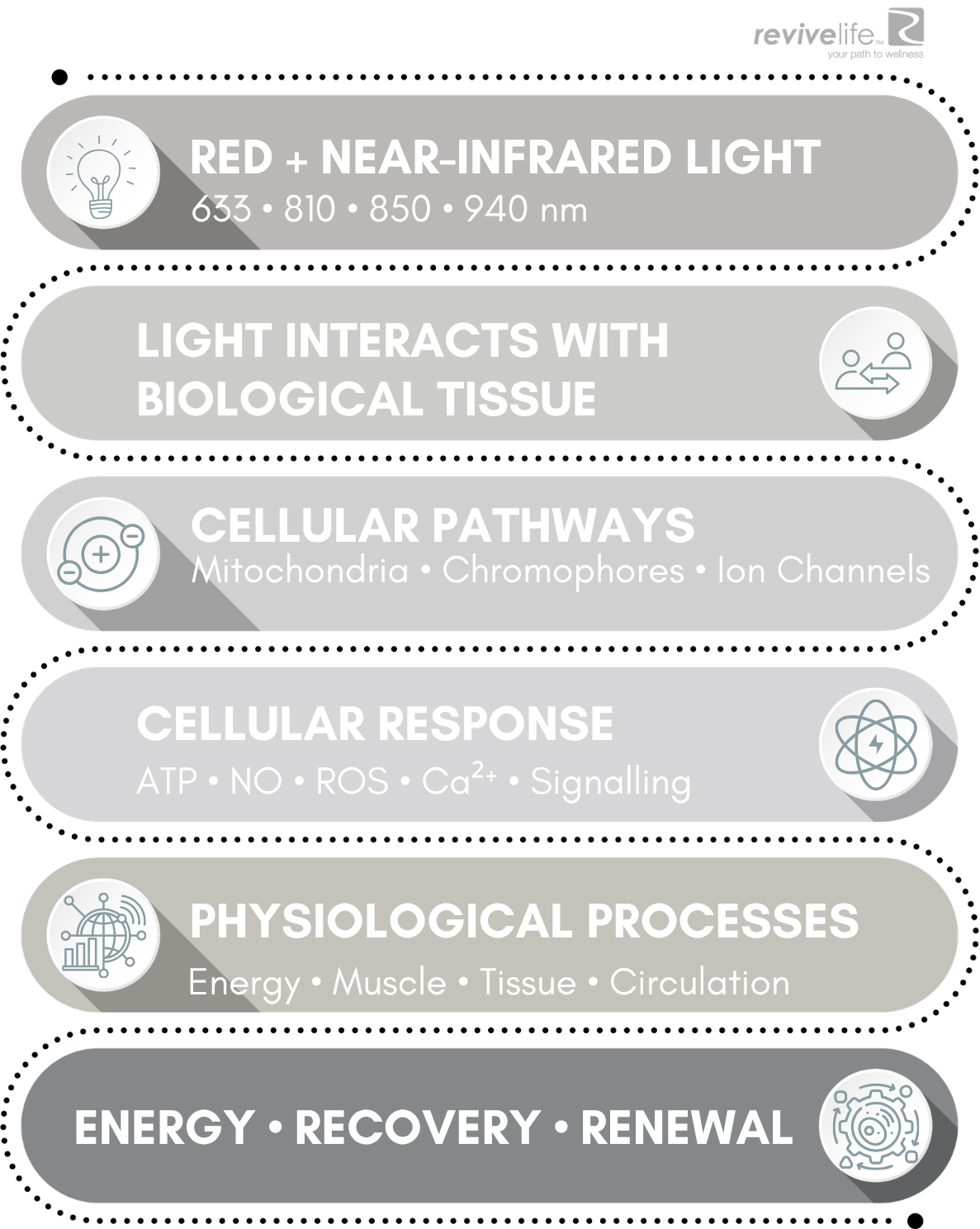
Photobiomodulation (PBM)—commonly known as red light therapy—uses specific wavelengths of red + near-infrared light to interact with biological tissues.
Researchers have studied PBM for decades, investigating how light may influence mitochondrial function, cellular energy, signalling, muscle physiology, skin and tissue processes. [1–6]
At Revivelife Longevity Lounge™, 03 RENEW™ brings this science into an advanced whole-body experience using TheraLight 360 MultiZone™.
Understand the Science Behind the Light.
Photobiomodulationuses non-ionizing red + near-infrared light to produce biological responses in exposed tissues.
Unlike ultraviolet light, PBM does not rely on UV radiation.
Instead, researchers study how specific wavelengths of red + near-infrared light are absorbed or interact with biological molecules and how those interactions can influence cellular processes. [1,2]
The biological response depends on several factors, including:
- Wavelength
- Intensity
- Dose
- Exposure Time
- Tissue
- Treatment Area
This is why not all red-light experiences are the same.
RENEW™ uses multiple wavelengths and personalized settings to create an advanced whole-body PBM experience.

A better way to think about it is: Light provides a biological stimulus that your cells can respond to.
Light. Energy. Response.
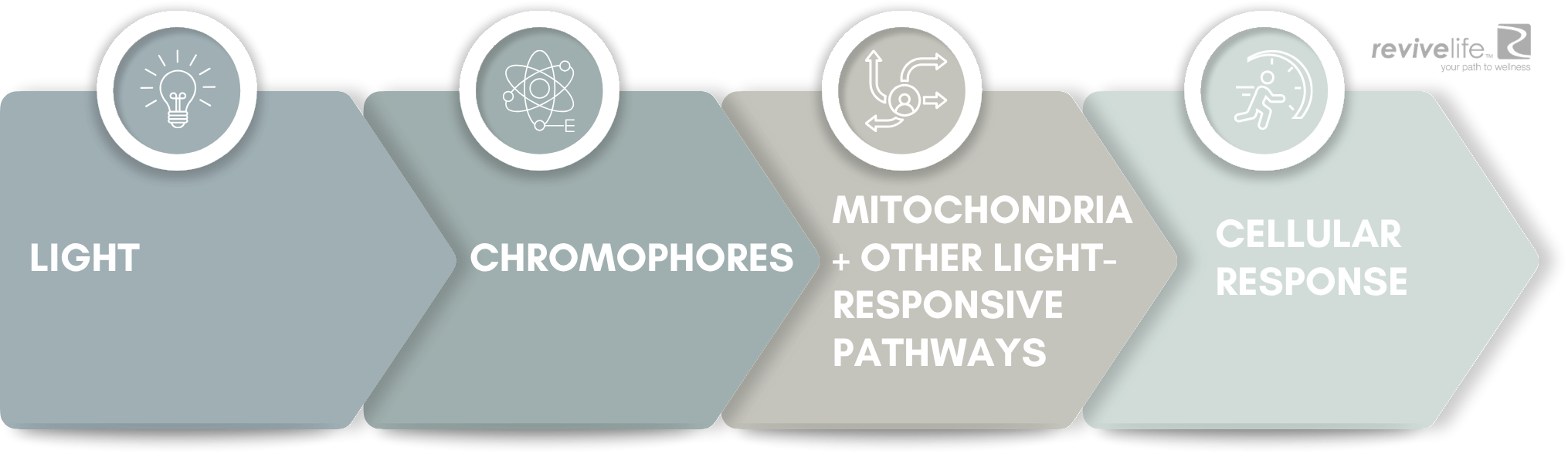
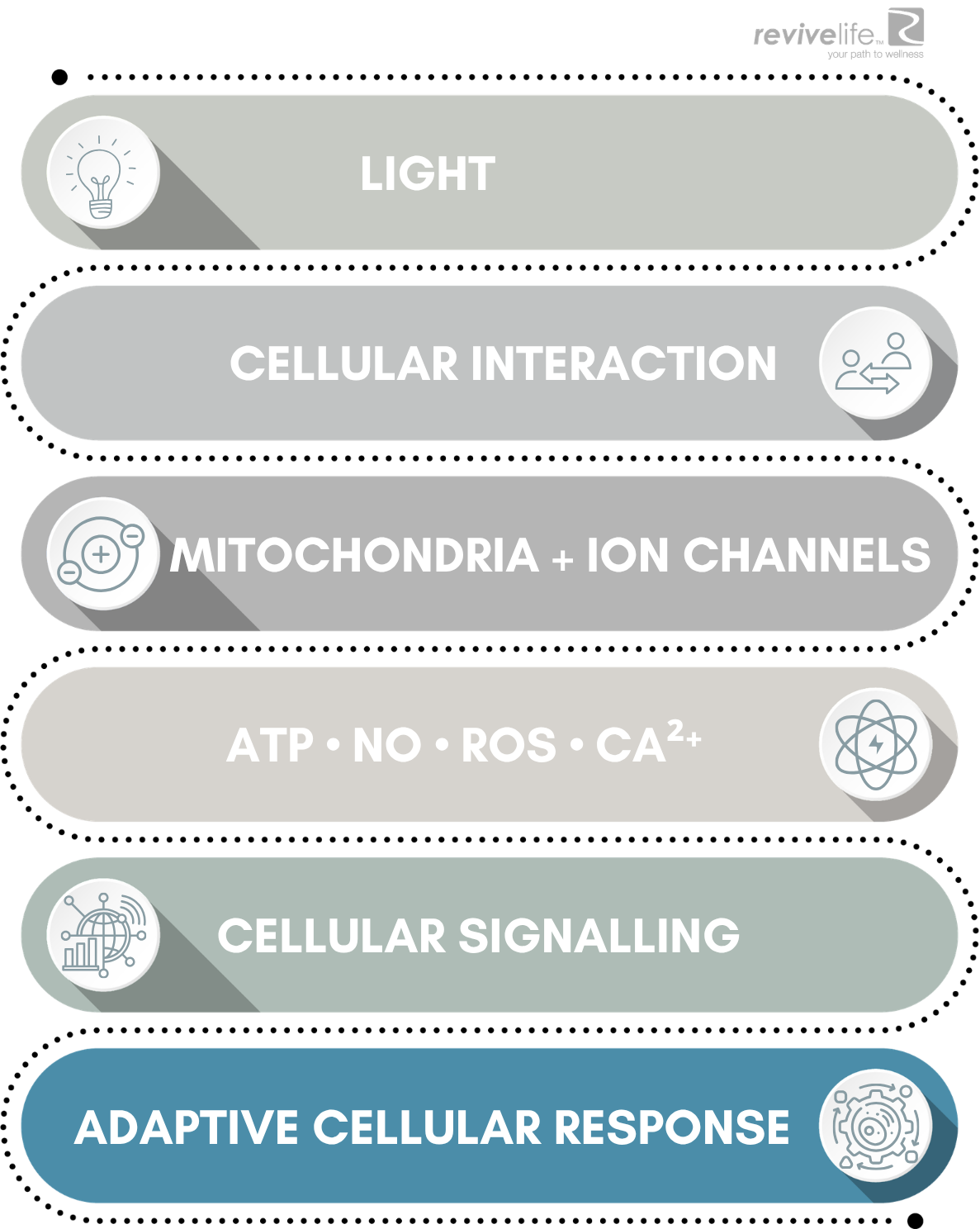
For light to produce a photobiological response, photons must interact with molecules capable of absorbing or responding to that light.
These light-responsive biological molecules are often referred to as chromophores. One of the most studied proposed mitochondrial targets in PBM research is:
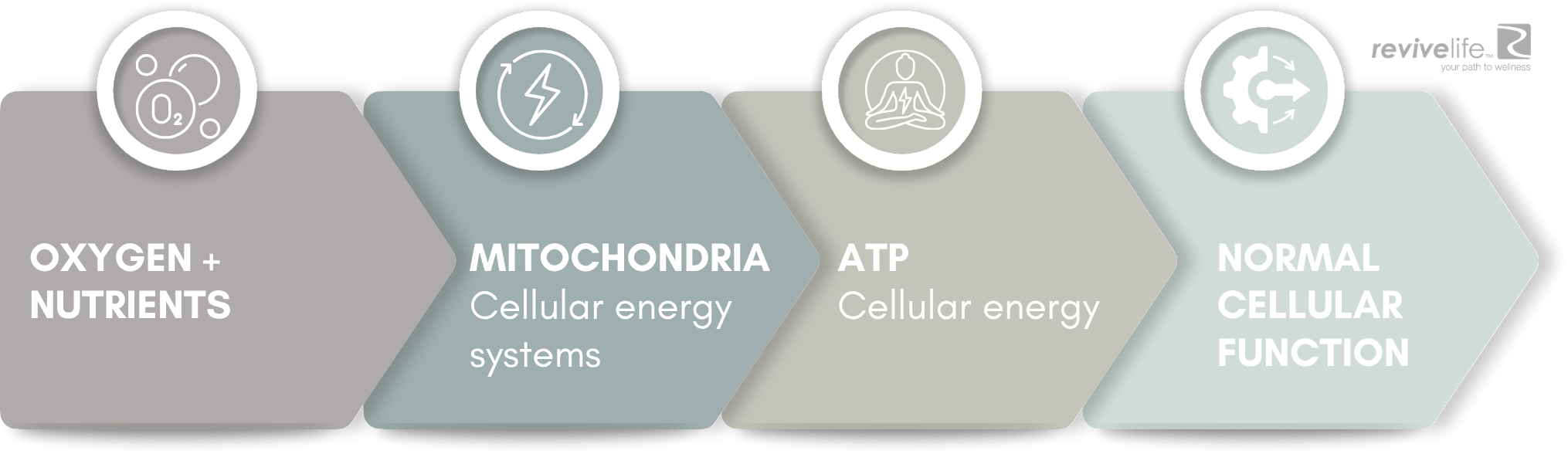
Nearly everything your cells do requires energy.
Mitochondria help convert oxygen + nutrients into ATP, which cells use to power normal biological activity.
ATP supports processes involved in: Muscle Contraction • Nerve Activity • Cellular Maintenance • Protein Synthesis • Tissue Function
PBM research has repeatedly investigated changes in mitochondrial membrane potential and ATP-related processes following light exposure. [1,2]
PBM research suggests that the biological response to light extends beyond cellular energy production.
Following the initial interaction with light, researchers have reported changes involving signalling pathways that include:
Photobiomodulation research spans decades and includes laboratory research, animal models, randomized clinical trials, systematic reviews and meta-analyses. A recent 2025 umbrella review synthesized 15 meta-analyses covering 204 randomized clinical trials and more than 9,000 participants across multiple PBM applications. [10]
The review found statistically significant benefits for some outcomes, but the authors also found that evidence certainty was often low to moderate and emphasized the need for larger, better-standardized trials.
TheraLight 360 MultiZone™ brings several PBM variables together within one system:
RENEW™ turns complex photobiomodulation technology into a simple, comfortable whole-body experience.
Frequently Asked Questions
THE SCIENCE OF RENEW™
Light Your Cells Can Respond To.
From mitochondrial biology and ATP to cellular signalling and tissue physiology,
photobiomodulation represents a growing field of research into how light interacts with the human body.
RENEW™ brings that science into an advanced whole-body experience.
LIGHT • ENERGY • RECOVERY • RENEWAL
This page is intended for educational and informational purposes and is not medical advice, diagnosis or treatment.
Photobiomodulation is an active area of scientific research. Findings vary according to wavelength, dose, treatment area, device, population and outcome, and findings from localized PBM research should not automatically be assumed to apply to whole-body PBM.
RENEW™ is offered as a wellness experience designed to complement a healthy lifestyle and recovery routine.
[2] Hamblin MR. Mechanisms and Applications of the Anti-inflammatory Effects of Photobiomodulation. AIMS Biophys. 2017. PMID: 28748217
[3] Liu J, et al. Bibliometric Analysis to Global Research Status Quo on Photobiomodulation. Photobiomodul Photomed Laser Surg. 2023. PMID: 38011736
[4] Borsa PA, et al. Does Phototherapy Enhance Skeletal Muscle Contractile Function and Postexercise Recovery? A Systematic Review. J Athl Train. 2013. PMID: 23672326
[5] Avci P, et al. Low-Level Laser (Light) Therapy (LLLT) in Skin: Stimulating, Healing, Restoring. Semin Cutan Med Surg. 2013. PMID: 23860798
[6] Leal-Junior ECP, et al. Effect of Phototherapy on Exercise Performance and Markers of Exercise Recovery: A Systematic Review With Meta-Analysis. Lasers Med Sci. 2015. PMID: 24249354
[7] Quirk BJ, Whelan HT. What Lies at the Heart of Photobiomodulation: Light, Cytochrome C Oxidase, and Nitric Oxide—Review of the Evidence. Photobiomodul Photomed Laser Surg. 2020. PMID: 32716711
[8] Huang YY, et al. Biphasic Dose Response in Low Level Light Therapy—An Update. Dose Response. 2011. PMID: 22461763
[9] Álvarez-Martínez M, Borden G. A Systematic Review on Whole-Body Photobiomodulation for Exercise Performance and Recovery. Lasers Med Sci. 2025. PMID: 39883205
[10] Son Y, et al. Effects of Photobiomodulation on Multiple Health Outcomes: An Umbrella Review of Randomized Clinical Trials. Syst Rev. 2025. PMID: 40770824